

サマープログラム
The University of Tokyo
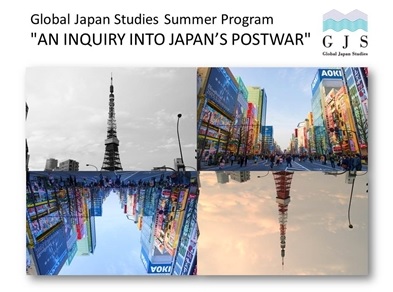
Global Japan Studies Summer Program 2016
AN INQUIRY INTO JAPAN’S POSTWAR
Aug. 24-Sep. 2, 2016
*Download 2016 Summer Program Report and Participants Feedback
About the Program
Description:
Japan's postwar period is most often described in terms of four decades of high economic growth followed subsequently by the recent recession dubbed “the lost two decades” (1990-present). Japan's postwar, however, points to a far more complicated and
ongoing process of social, cultural, and political changes, which this program is set to explore.
Participants will be immersed in a ten-day intensive program of interdisciplinary academic lectures (in humanities, social sciences, and engineering) and talks by eminent public figures with illustrative life stories, as well as carefully planned fieldtrips in Tokyo and surrounding areas. Through a well-designed combination of on- and off-campus study, the program challenges participants to both critically analyze and actually experience specifically identified sociological and technological issues, such as sustainable urban planning and social stratification in relation to pop culture. These issues are key for understanding not only Japan's postwar itself but also the larger world to which Japan is closely connected and of which Japan is intrinsically a part. Prominent professors like Profs. Shunya Yoshimi, Yasuo Kobayashi, and Akihiko Tanaka will lecture in this flagship program.
Objectives:
By the end of the program, participants will have
- improved their Japanese language as a result of daily Japanese lessons and intermingling with Japanese students from the University of Tokyo;
- gained a more nuanced understanding of Japan's postwar as a changing, complex society and culture;
- learned a set of analytical skills with which to analyze social phenomena in Japan and other parts of the world;
- improved their intercultural communication skills as a result of collaboration in research projects and presentations with fellow students from different countries of the world.
The program will also include a guidance session on information about the University of Tokyo's graduate programs offered in English.
Program requirements:
- participants are required to conduct group research projects and give presentations on the final day of the program. Project topics shall be decided in consultation with program faculty members.
- Participants will also be required to complete a program evaluation paper.
Schedule: (subject to change)

SUMMER PROGRAM LECTURERS (in alphabetical order)
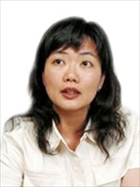
Yuki HONDA
(Professor of sociology of education, the Graduate School of Education, the University of Tokyo)
Prof. Honda’s study focuses on relations between education, work, and family. Since early 1990s, Japanese society has witnessed a conspicuous growth of discrepancies in relations between these three social systems, which include dysfunctions of
‘transition from school to work’, escalation of pressures on responsibilities of parents to educate their children, widening inequality in educational opportunities, and expansion of poverty among families with children. Prof. Honda explores causes
and solutions to these problems, especially necessary reforms of education and new roles of the government and civil movements.
Link to Prof. Honda’s research information
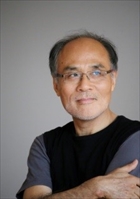
Yasuo KOBAYASHI
(Professor, Aoyama Gakuin University in Tokyo; professor emeritus, the University of Tokyo)
Graduating from the department of French at the University of Tokyo in 1974, Prof. Kobayashi worked under the influence of contemporary French philosophy on interdisciplinary criticism of art and literature. In 1981, he completed his doctorate in
Semiotics at the University of Paris X-Nanterre, with a thesis on the philosophical problematic of time and text (jury members including Jean-François Lyotard and Jacques Derrida). He has published over eighteen books in Japanese on the subjects of
literature, art, architecture, photography, philosophy, and science including:
Origin and Root
(Miraisha, 1991);
Body and Space
(Chikuma Shobō, 1995);
The Optics of Representation
(Miraisha, 2003);
The Odyssey of Savoir
(Tōkyō Daigaku Shuppankai, 2009),
The Deconstruction of History
(Miraisha, 2010),
The Catastrophe of Being
(Miraisha, 2012),
Opera of the Japanese post-war Culture
(Miraisha, 2016).
Le Coeur/La mort
(UTCP, 2007) is available in French and English. He has proposed a new university-level curriculum, and edited a number of anthologies on the subject of pedagogy. His translations from French include the works of Duras, Lyotard, Derrida, Levinas, et
al. Prof. Kobayashi has been director of the University of Tokyo Centre for Philosophy (UTCP) since its creation in 2002 to 2015.
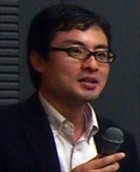
Akito MURAYAMA
(Associate Professor of Urban Planning, Department of Urban Engineering, School of Engineering, the University of Tokyo)
Prof. Murayama graduated from the department of urban engineering in the school of engineering at the University of Tokyo in 2004 and started to work at the University of Tokyo from April 2014. He received the City Planning Institute of Japan Paper
Encouragement Award in 2004 (City Planning Institute of Japan) and the Landscape Installation Award in 2013 (Nihon Mokuzai Seisounen Dantai Rengokai 16th Wood Utilization Contest). His co-authored English publications include "Living Cities in Japan:
Citizens' Movements, Machizukuri and Local Environments" (Routledge, 2007), "Innovations in Collaborative Urban Regeneration" (Springer, 2009) and "Basic and Clinical Environmental Approaches in Landscape Planning" (Springer, 2014). Prof. Murayama
participates in many planning and community design practices across Japan.
Link to Prof. Murayama’s research information
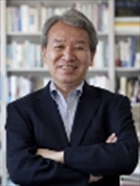
Akihiko TANAKA
(Professor of International Politics, the Institute for Advanced Studies on Asia (IASA), the University of Tokyo)
Prof. Tanaka specializes in theories of international politics, contemporary international relations in East Asia, and Japan’s foreign policy. He has numerous books and articles in Japanese and English including
The New Middle Ages: The World System in the 21st Century
(Tokyo: The International House of Japan, 2002). Professor Tanaka received the medal of honor with purple ribbon (shiju hosho) for his academic achievements in 2012. He was director of the Institute for Advanced Studies on Asia in 2002-2006,
Executive Vice President of the University of Tokyo in 2009-2011, and Vice President there in 2011-2012. He served as President of the Japan International Cooperation Agency (JICA) from 2012 to 2015. He was also Visiting Professor at Ruhr University,
Bochum, Germany, in 1986, and a Senior Associate Member at St Antony's College, Oxford, from 1994 to 1995.
Link to Prof. Tanaka’s research information
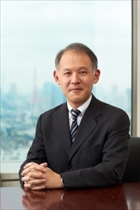
Shigeki UNO
(Professor, the Institute of Social Science, the University of Tokyo)
Prof. Uno’s major fields of research are history of political thought and political philosophy. His prolific publications in both Japanese and French include
How to Make Democracy?
(Chikumashobo, 2014) and
A History of Western Political Thought
(Yuhikaku, 2014) as well as journal articles and book chapters including “Re-integration of Liberalism and Republican Liberty,”
Shiso, 965 (2004), 84-101, and “Les idées politiques du Japon de l'époque moderne”, Jean-Francois Sabouret (ed.),
La Dynamique du Japon
(Paris, Saint-Simon, 2005), 83-92. His current research topics include: (1) Democracy and Religion; (2) Labor, Local Governance and Hope in Contemporary Japan; (3) Contemporary Political Philosophy in the Comparative Perspective: America, France and
Japan; (4) History of French Political Thought in 19th century.
Link to Prof. Uno’s research information
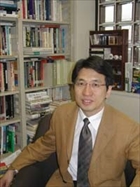
Shunya YOSHIMI
(Professor of Sociology, Cultural Studies, and Media Studies, the Graduate School of Interdisciplinary Information Studies, the University of Tokyo; Vice-President of the University of Tokyo)
A leading scholar in the field of media and cultural studies in contemporary Japan, Prof. Yoshimi is the author of many books on cultural theory, urban culture, international exposition, media culture, information technology, the emperor system, and
Americanization in modern Japan and East Asia. He is a member of the executive committee of
Inter-Asia Cultural Studies
(Routledge), editorial board of
Cultural Studies
(Routledge), associate editors of
Theory, Culture & Society
(Sage), and the editorial advisory board of
Japanese Studies
(Carfax Publishing). Publications in Japanese include
Dramaturgy in the City: A Social History of Popular Entertainments in Modern Tokyo
(Kobundo, 1987),
The Politics of Exposition: Imperialism, Commercialism and Popular Entertainment
(Chuokoronsha, 1992),
Cultural Sociology in the Media Age
(Shinyosha, 1994),
Voice of Capitalism: The Social Construction of Telephone, Gramophone and Radio in Japan
(Kodansha, 1995),
Expo Syndrome: Postwar Politics and Cultural Struggle in Postwar Japan
(Chikuma Shobo, 2005),
Pro-America, Anti-America: Political Unconsciousness in Postwar Japan
(Iwanami Shoten, 2007), etc.
Link to Prof. Yoshimi’s research information
SUMMER PROGRAM GJS FACULTY MEMBERS
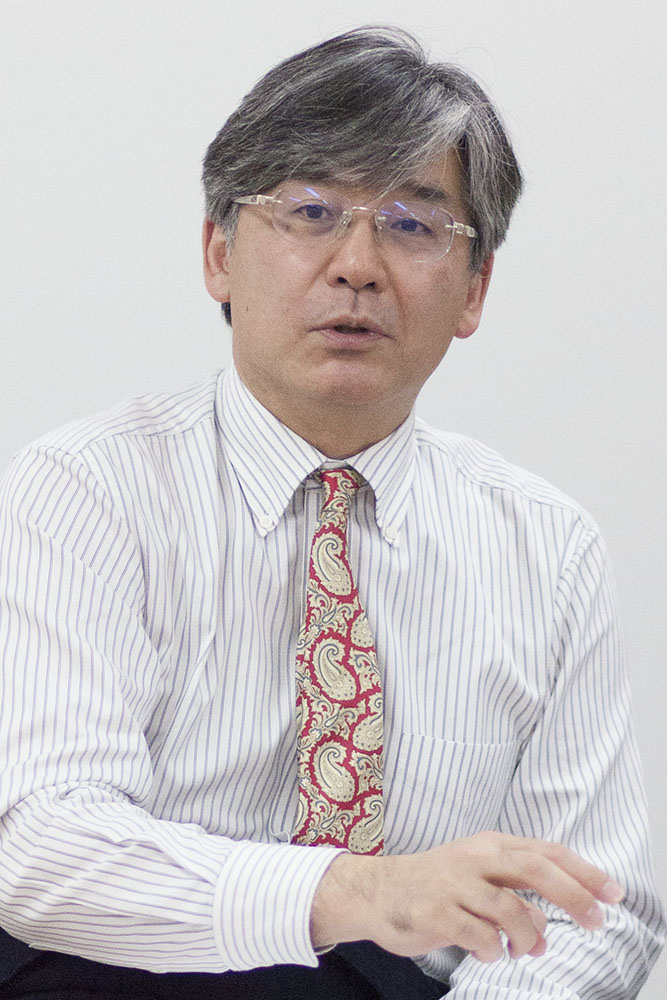
Shigeto SONODA
(Professor, Graduate School of Interdisciplinary Information Studies/Institute for Advanced Studies on Asia)
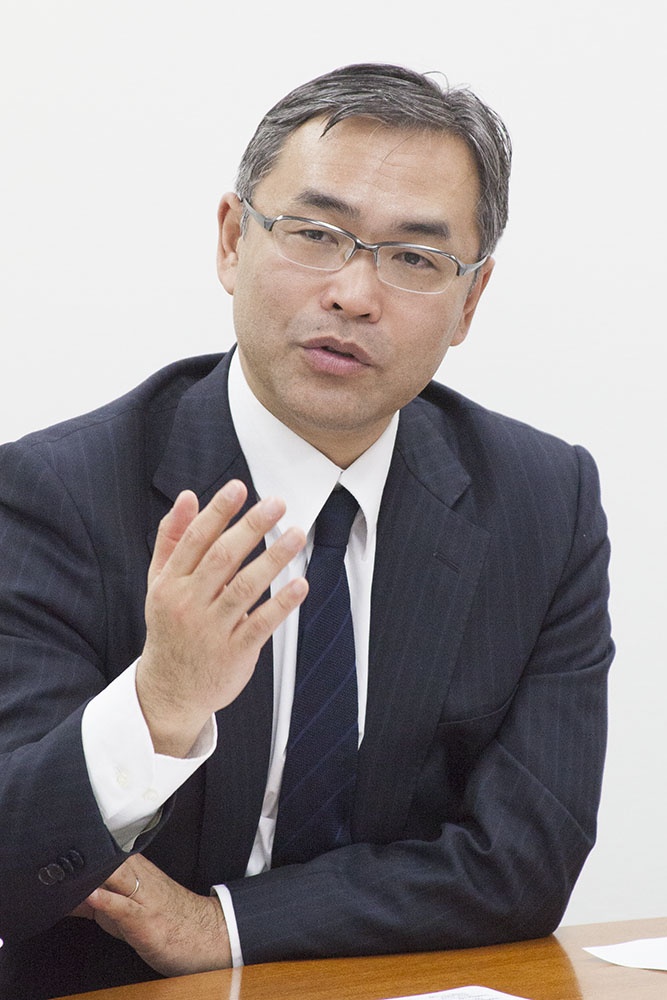
Takahiro NAKAJIMA
(Professor, Institute for Advanced Studies on Asia)
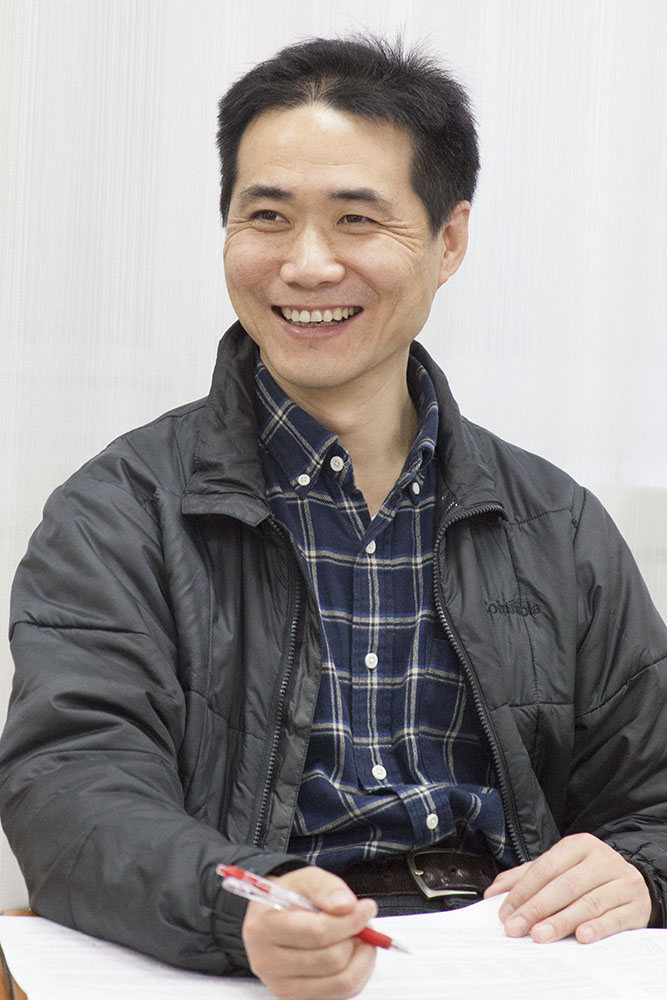
Yijiang ZHONG
(Associate Professor, Institute for Advanced Studies on Asia)
Yoko NII
(Assistant Professor, Institute for Advanced Studies on Asia)
SUGITANI Kota
(Project Researcher, Institute for Advanced Studies on Asia)
Links
- The University of Tokyo
- Institute for Advanced Studies on Asia (IASA)
- Global Japan Studies website
- USTEP
- UTokyo graduate programs offered in English (ITAsia, IHS, School of Science, etc.)
- UTokyo School of Engineering
Program Host Institution:
Institute for Advanced Studies on Asia
Program Organizer:
Global Japan Studies (GJS) Research Network
Program Committee Advisers:
Prof. Sonoda Shigeto, Prof. Nakajima Takahiro
Secretariat:
Prof. Nii Yoko, Prof. Zhong Yijiang
Contact:
Prof. Nii Yoko (person in charge)
gjs[at]ioc.u-tokyo.ac.jp
Tel: (81)3-5841-5891
Fax: (81)3-5841-5898
Global Japan Studies
The Global Japan Studies at the University of Tokyo is an interdisciplinary and multilingual network of research and education on Japan. It seeks to bring together Japanese studies overseas and studies of Japan within Japan.